There has been a noticeable campaign to use tallow in body care products. Many cottage industry and small-time naturalist makers are using tallow in their soaps and lotions, but at what health risk to customers? The use of beef tallow in body care products is not a new concept. Early American settlers used it to make soap. However, we may be underestimating the health risks associated with the current diet of heifers used to extract the beef tallow utilized in body care products.
What is beef tallow and where does it come from? Beef tallow is a rendered form of fat from cows, specifically the fat surrounding their organs.
Tallow is a rich source of healthy fats, including conjugated linoleic acid (CLA), which has been shown to have numerous health benefits. CLA has been linked to improved immune function, reduced inflammation, and even weight loss. Tallow also contains other important nutrients such as vitamin E and omega-3 fatty acids.
Tallow is a whiteish substance that is solid at room temperature. It’s made by removing, simmering, and clarifying the fatty tissue that surrounds the organs of the animal, done at the slaughterhouse. Beef tallow is made from cows and is commonly called “beef drippings.” While both beef dripping and tallow are derived from beef, they have different properties and uses. Tallow also has a mild beefy flavor.
On average, a slaughterhouse will kill and process about three hundred cattle an hour, more than 10,000 cattle per five-day work week, and more than 500,000 cattle per year. This amounts to one cow being killed and processed every 12 seconds, per Timothy Pachirat, author of ‘Every Twelve Seconds.’ Yet the industry is experiencing record-high prices for beef. Beef producers are experiencing historical record-breaking pricing almost daily [July 2025]. Record-high cash steer prices, record-high feeder cattle prices, record-high wholesale beef prices, and record-high retail beef prices are all contributing to this beef surge. But there’s a problem; there is a tight supply of fat cattle, and it will take years for that supply chain to increase. https://www.foxbusiness.com/lifestyle/beef-prices-surge-demand-outpaces-supply-recovery-more-unpredictable
It’s created a massive surge in demand for replacement heifers. Beef packers have been forced to compete to preserve market share. So how can manufacturers make more money? To keep the beef industry money machine going, an alternative consumable product produced from the heifer is making as an explosive entry into the body care marketplace: beef tallow. Here lies the resurgence of beef tallow.
In the past, beef tallow had a low profit yield and was often sold off to China. But with trade restrictions and other factors, the beef industry is creating a new niche by developing a market and demand for beef tallow in the body care industry. An industry known for poor consumer advocacy and protection from unsafe ingredients.
The beef industry can achieve higher profits for its fat yield by developing a demand in the US. One of the fastest-growing industries in the US is the body and health care industry. Here, the beef factory manufacturers can unload their tallow at higher yields and arguably relinquish responsibility for any end-user adverse usage from their tallow.
So if tallow has all these health benefits like Omegas and vitamins, why should we care that the beef industry is campaigning to increase demand for beef tallow in body care products?
- The beef tallow is the main part of the cow that retains toxins, vaccination poisons, inflammation, viruses, bacteria, and pathogens.
- When tallow is used in its raw form without being cooked or processed for decontamination in body care products.
- The modern diet for factory cows is corn. Research shows that corn-fed cows increase the imbalance of Omegas to an extremely unhealthy level for our bodies. Additionally, all those vitamins and nutrients are no longer present.
- Even grass-fed cows are at risk of contamination from poor slaughterhouse management and practices.
Health Risk 1 – Omega-6 to Omega-3 Imbalance
Let’s go back to the cows. The more a cow yields, the higher the profit. Yields are divided based on the breed and usable meat. Meat factories feed their animals corn due to cost and profit. Corn also adds weight quickly to the cow. Corn is bad for the animal. Corn is a modern food source for cows, so they are prone to infectious diseases, inflammation, toxins, and digestive stress as a consequence. These maladaptive properties are stored in the cells of the cow, mostly in its connective tissues and fat. The corn the cow eats is also stored in the fat of the cow.
When corn, infections, diseases, inflammation, and toxins are stored in the heifer’s fat the benefits of tallow become adversely damaging to the human body.
The omega fatty acids in beef tallow from corn fed cows offer a dangerous range of omega 6-3 ratio changes to a 30-1 ratio. Omega-6 to Omega-3 imbalance links to diseases such as Parkinson’s, Alzheimer’s, diabetes, autoimmune disorders, and other diseases.
Mega-3 fatty acids are important for both the brain and nervous system.
A key component of these systems is the brain cell membranes. These membranes generate and conduct the electrical impulses that play a role in everything from simple movement to language, reasoning, and memory formation and recall.
In addition, these signals cannot be conducted properly without myelin, which insulates the fibers of nerve cells. Myelin also requires ample omega-3 fatty acids to function optimally.
Omega-3s also increase levels of brain-derived neurotrophic factor. This hormone-like protein promotes brain plasticity, which helps the brain respond to changes, form new memories, recover from injury, and maintain cognitive function.
pubmed.ncbi.nlm.nih.gov/12442909/ The Importance of the ratio of omega-6/omega-3 essential fatty acids
Health Risk 2 – High percentage for allergies, inflammation, and illness
A sick cow produces more inflammation in its body, which sets off an unhealthy chain reaction in the cow’s body. Some individuals have a sensitivity to histamines, which are inflammatory compounds found in tallow. Raw tallow contains a higher concentration of bacteria and naturally occurring microbes. Some of these compounds, like lipopolysaccharide (LPS), can irritate the skin and cause other health issues.
Tallow used in body care products, including soap, typically has a high pH level, usually around 9 to 10, which can disrupt the natural pH balance of the skin and cause skin allergies. This high alkalinity may lead to dryness or irritation for some users.
Health Risk 3 – Toxin Transfer
Dr. Axe points out that poorly rendered or low-quality tallow (from grain-fed, non-organic sources) may contain residues like hormones, antibiotics, or bacteria. All of which can leach into your skin, bloodstream, and cells when used.
Health Risk 4 – Cross Contamination
Slaughterhouses don’t distinguish between healthier the grass-fed in grass-fed out cows from meat factory cows. When you bring a cow in for processing, the cows are going through the slaughterhouse right after the cows that were in the cow factories. Contamination and the ability for infectious diseases to spread are common.
So even if you are buying tallow from a local grass-fed in grass-fed out family farm, unless they are doing the slaughtering themselves, the tallow could be contaminated from the slaughterhouse.
Cows must be vaccinated and administered a range of chemical injections to keep them alive. This is a modern concept. Factory meat production is so perverse in its acquisition of high-profit cow meat that it puts the consumer in danger of getting infections from the sick cows. Cows are injected with chemicals that are then passed onto the consumer through internal consumption or by administering the fat tallow on their bodies.
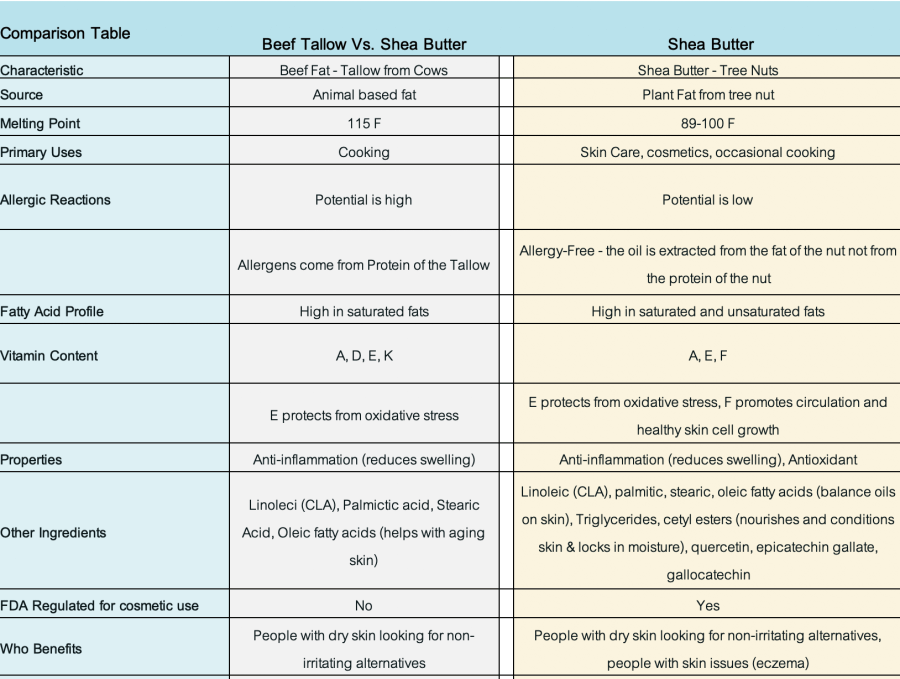
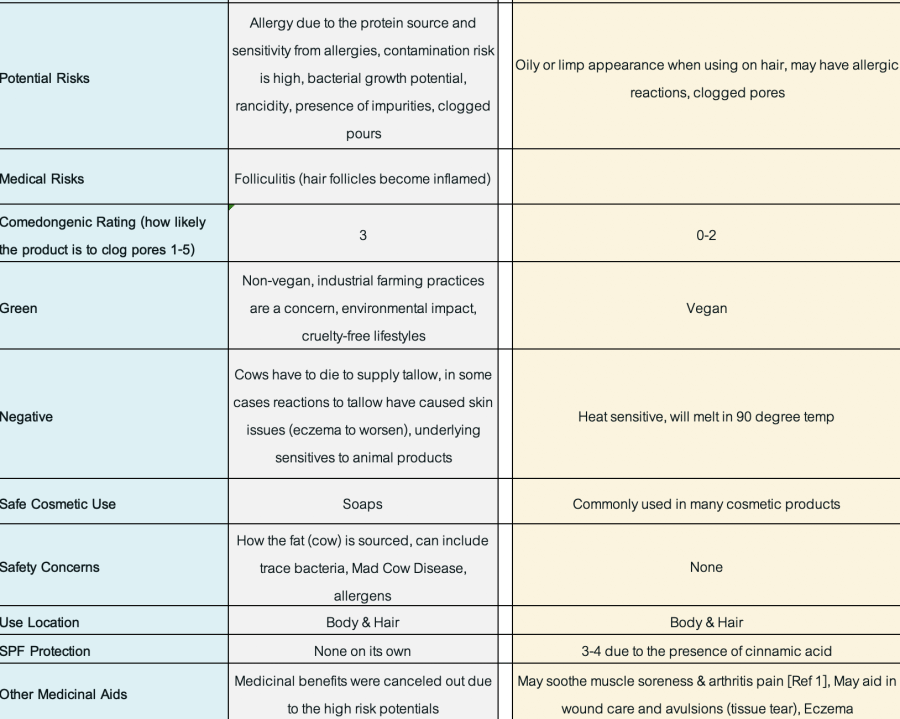
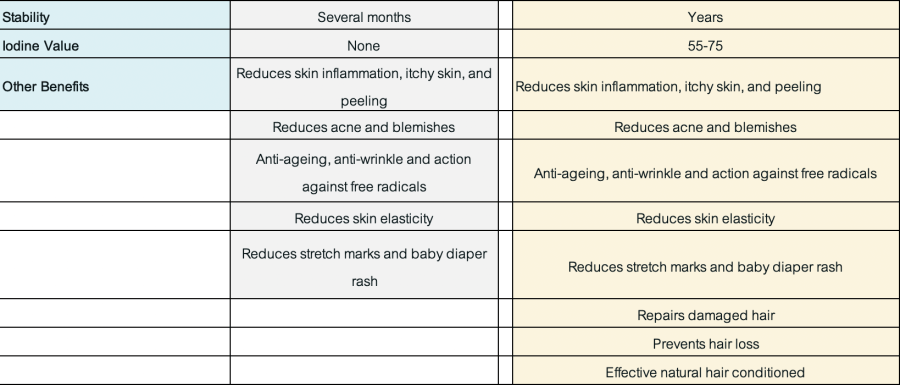
Fortunately, other ingredients offer healthier options. Shea butter is one alternative that provides healthy fats. Compare the properties of beef tallow and shea butter in the chart below.